
Sharpow
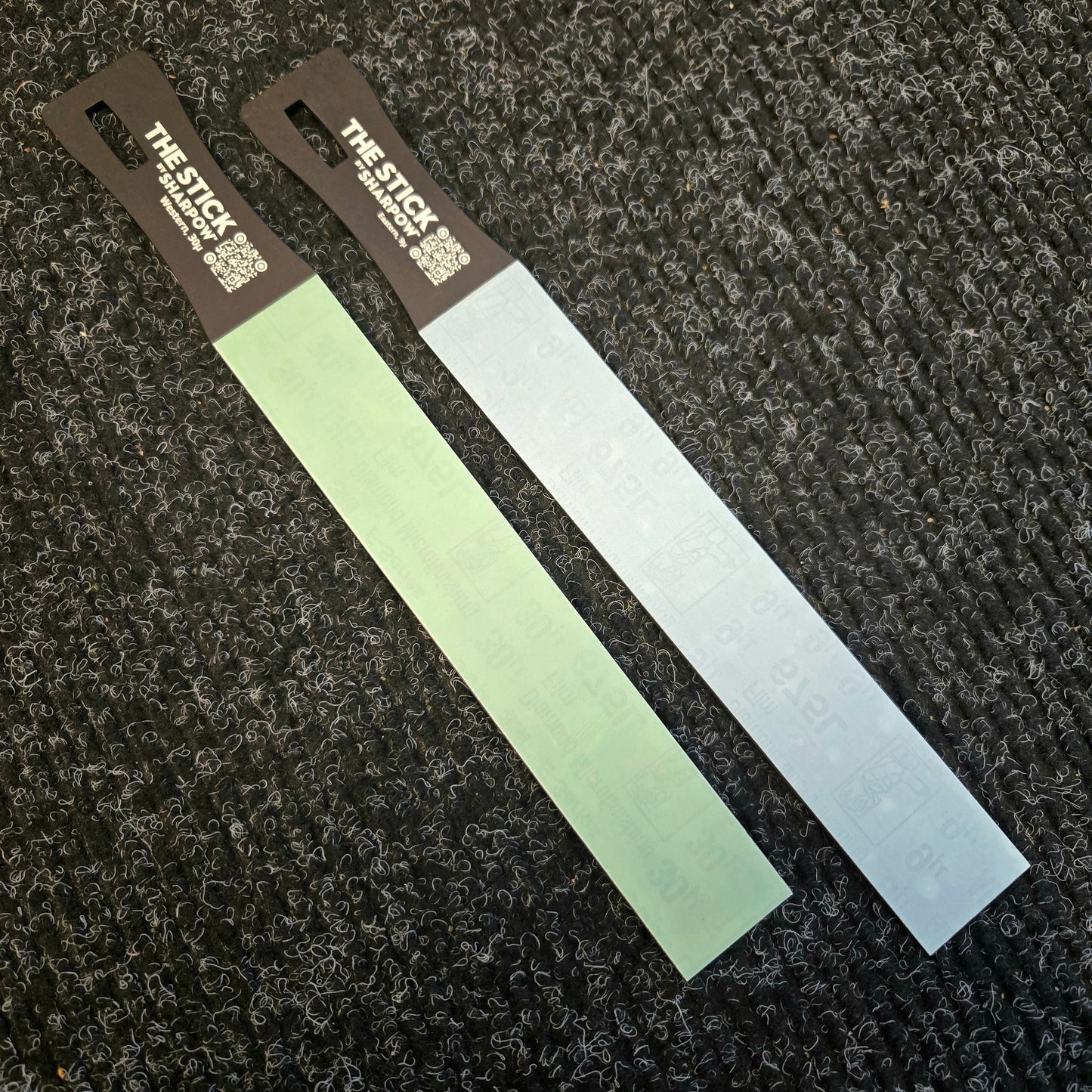
The Stick by Sharpow
The Stick by Sharpow
Couldn't load pickup availability
The Stick by Sharpow was created inside Vivront's sharpening shop in Edina, Minnesota after servicing tens of thousands of knives and studying how edges actually fail in real kitchens. It fills the space between a honing rod and a full sharpening service providing light, predictable abrasion that restores bite without reshaping the bevel or removing unnecessary metal.
Unlike honing rods, which require precision most people are never taught, the Stick uses a stable, counter-top motion that feels natural the first time you try it. Spine-forward. Edge trailing. Tip first, heel last. The same motion you already know from buttering bread. A few smooth passes can bring back the lightly toothy micro-texture that makes cutting feel clean and controlled.
Note: The Stick is not a hone and not a sharpener. It is a maintenance tool meant to be used after sharpening and before dullness sets in. It's for the everyday edge that feels tired but not yet destroyed.
Why It Works
Edge-trailing motion: a spine-forward, tip-to-heel stroke that lightly refreshes the apex without tearing it off.
Flat, stable form: rests on the counter, eliminating the air-honing angles that cause most users to dull their knives.
Performance-grade abrasive: material with highly consistent particle size for uniform results.
Rigid aluminum body: light, durable, and won't roll, ideal for kitchen stations, butcher blocks, and knife rolls.
Shopping for a Honing Rod? Read This First
Most people buying a honing rod or honing steel want one thing: knives that keep cutting well between sharpenings. That is exactly the job The Stick was designed to do — without the part where you hold a moving blade at a precise angle in mid-air.
A rod asks you to find and hold the bevel angle freehand, stroke after stroke, every time. The Stick rests flat on the counter. Spine-forward, edge trailing — the same motion as buttering bread. There is no angle to find, because the tool holds it for you.
If you have owned a rod for years and your knives still drift dull, the rod was not the problem. The technique it demands is. This replaces the routine, not just the tool.
Questions, Answered
Is The Stick a honing rod?
No. It does the job most people buy a honing rod for — keeping an edge cutting cleanly between sharpenings — using light, uniform abrasion instead of realignment. No freehand angle required.
What is the difference between honing and sharpening?
Honing realigns an edge that has rolled over; sharpening removes metal to rebuild the edge. The Stick sits between the two: a few flat, controlled passes that refresh the apex without reshaping your bevel.
Do I still need to get my knives sharpened?
Yes. The Stick stretches the time between sharpenings — it does not replace them. When the edge is truly gone, mail-in knife sharpening brings it all the way back.
Which version do I need?
30 MIC for Western knives (Wüsthof, Zwilling, Cangshan). 9 MIC for Japanese knives (Shun, Miyabi, Kikuichi). 45 MIC for butcher and heavy-use blades.
How often should I use it?
A few passes per side, about once a week for a knife you use daily. Two minutes, on the counter, done.
Share